MARKETS
TikTok Shop's Forced Fulfillment Mandate Is Alienating the Small Sellers Who Built It
A February 2026 policy would have ended self-managed seller shipping by March 31 before TikTok paused the mandate eight days ahead of deadline, after brands cited margin hits and 3PL disruption, trade press reported.

Thomas Brennan · Investigative Reporter
10 min read
 MARKETS
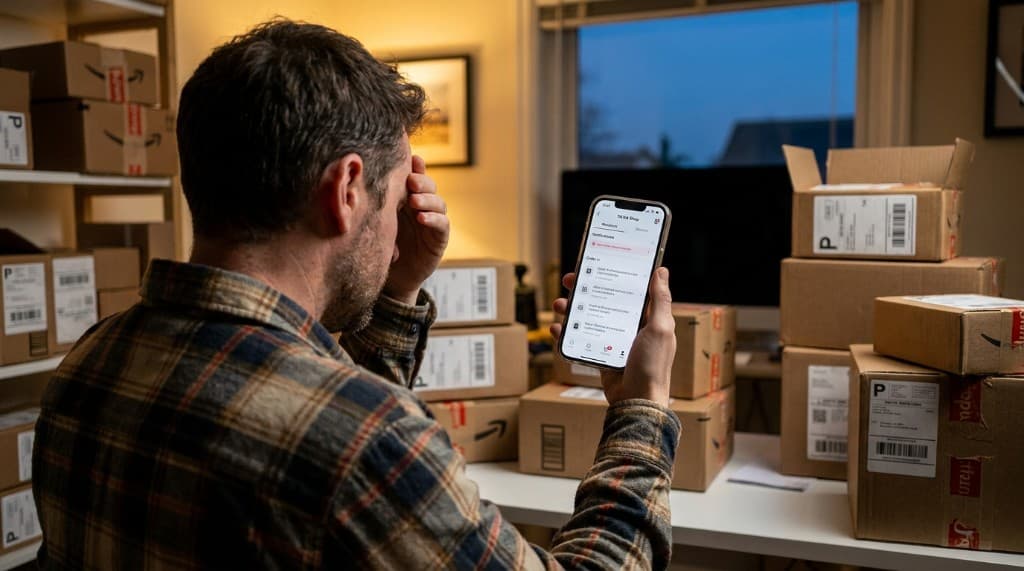
TikTok Shop built its U.S. commerce operation on the backs of small and emerging brands — entrepreneurs who took a chance on an unfamiliar platform, absorbed the learning curve, and turned the platform's short-form video format into a viable sales channel. By early 2026, TikTok Shop had established itself as a legitimate e-commerce destination, with tens of thousands of sellers and a growing share of social commerce volume.
Then the platform announced a policy that would have forced every one of those sellers to use TikTok's in-house logistics network — regardless of whether doing so made economic sense for their businesses.
The reversal that followed, after a wave of seller backlash, was a telling moment. It revealed both the limits of TikTok Shop's platform power and the underlying dynamic that governs how major commerce platforms eventually treat the small operators who provided early credibility.
Related: Amazon Fees Tighten the Vise: How 2026 Cost Increases Are Squeezing Third-Party Seller Margins
The Mandate and What It Required
In early 2026, TikTok Shop announced that beginning February 9, 2026, new sellers would no longer be able to onboard with the platform's "Seller Shipping" option — meaning self-managed fulfillment using a seller's own carriers or third-party logistics providers. Existing sellers faced a transition timeline ending March 31, 2026, by which point all orders would need to move through one of three TikTok-controlled logistics options: Fulfilled by TikTok (FBT), Upgraded TikTok Shipping, or Collections by TikTok (CBT).
The policy effectively meant that TikTok would become the mandatory intermediary between sellers and their customers — controlling the warehousing, last-mile delivery, and much of the customer experience that had previously been within the seller's domain.
The stated rationale centered on speed and consistency. TikTok Shop promoted the policy as a way to deliver the "Free 3-Day Delivery" badge that boosted product visibility in its algorithm. The company cited internal data suggesting that FBT products qualified for free shipping with no minimum order threshold, and that multi-unit fulfillment fees would decrease by up to 24% for two-to-four item orders in certain weight tiers beginning January 2026.
What Sellers Said
The seller response was swift and pointed. According to reporting by Modern Retail and coverage from Beauty Independent, brands across categories publicly raised concerns about the policy's impact on margins, operational flexibility, and existing third-party logistics partnerships.
Related: Amazon FBA's Margin Squeeze: Why the Gold Rush Is Over and What Sellers Are Doing Instead
The Reversal and What It Signals
On February 17, 2026 — eight days before the first enforcement deadline — TikTok Shop paused the mandate. The platform announced that the deadlines would not go into effect and that independent seller shipping would remain available.
The reversal followed what multiple industry observers described as weeks of escalating seller pushback, including public statements from emerging brands and threatened exits from the platform.
The episode is instructive for what it reveals about TikTok Shop's strategic position. The platform needs seller inventory breadth to attract buyers. Its competitors — Amazon, Walmart, Shopify-powered stores — offer established, understood seller experiences. TikTok Shop's ability to compel sellers to accept unfavorable terms is constrained by the fact that sellers have alternatives and have not yet committed to the platform in the way that established Amazon FBA sellers have sunk capital into Amazon's ecosystem.
However, the reversal should not be read as a permanent concession. Amazon introduced mandatory requirements gradually over years, using incentives before converting them to mandates. TikTok Shop's logistics ambitions have not changed; only the timeline has shifted.
The Platform Power Play Pattern
The strategic logic behind mandatory fulfillment programs is consistent across platforms. Amazon launched FBA as an optional service, made it effectively required to win the Buy Box, and ultimately built a logistics infrastructure that now generates roughly $170 billion in annual third-party seller services revenue. Its storage fees, placement fees, and increasingly granular penalty structures are the mature expression of a platform that captured seller dependency.
TikTok Shop is executing an earlier iteration of that same playbook. It has attracted small and mid-size sellers with low barriers to entry, favorable initial terms, and access to a large and engaged audience. Having established seller participation, it is now introducing logistics products and, periodically, testing its ability to mandate their use.
The economics of platform logistics are straightforward: when a platform controls fulfillment, it captures warehouse revenue, shipping revenue, return processing revenue, and data on every transaction. It also gains operational leverage over sellers who become dependent on platform infrastructure.
For small sellers — particularly those who built businesses on TikTok's early openness — the risk is the same it has always been on any third-party marketplace: the terms that made the platform attractive at entry are not guaranteed to remain in place as the platform matures and accumulates leverage.
Where the Platform Stands
TikTok Shop's U.S. operation continues to evolve in a complicated environment. The platform's ownership situation — TikTok was subject to forced divestiture proceedings under U.S. law through 2025 before a resolution was reached — created regulatory uncertainty that shaped some of its operational decisions.
FBT pricing, as of early 2026, does offer competitive rates in certain configurations. Multi-unit fulfillment fee reductions of up to 24% for orders in lower weight tiers are a genuine improvement over earlier pricing. Storage fees dropped by 14% to 43% for inventory stored up to 270 days, effective December 2025.
For sellers whose product mix aligns with TikTok's video-commerce audience and whose logistics profile fits FBT's capabilities, the platform represents a real opportunity. The combination of content-commerce integration — where a creator's video can translate directly to a product sale — remains a differentiated feature.
But the February 2026 episode illustrated that TikTok Shop's relationship with small sellers involves a recurring tension: the platform needs those sellers for assortment and authenticity, while simultaneously working to consolidate logistics control in ways that serve platform economics more than seller economics. That tension has not been resolved. It has only been deferred.
Sourced from Modern Retail, Beauty Independent, Easyship, CedCommerce, and TikTok Shop's own policy announcements. FBT rate data from TikTok Shop Seller University.
More in Markets



Community
Join the discussion
Moderated comments are scheduled for a later release. Editors still welcome tips, corrections, and primary documents through the contact channels listed in the site footer.